Recovering the Lost Melody of Biblical Hebrew
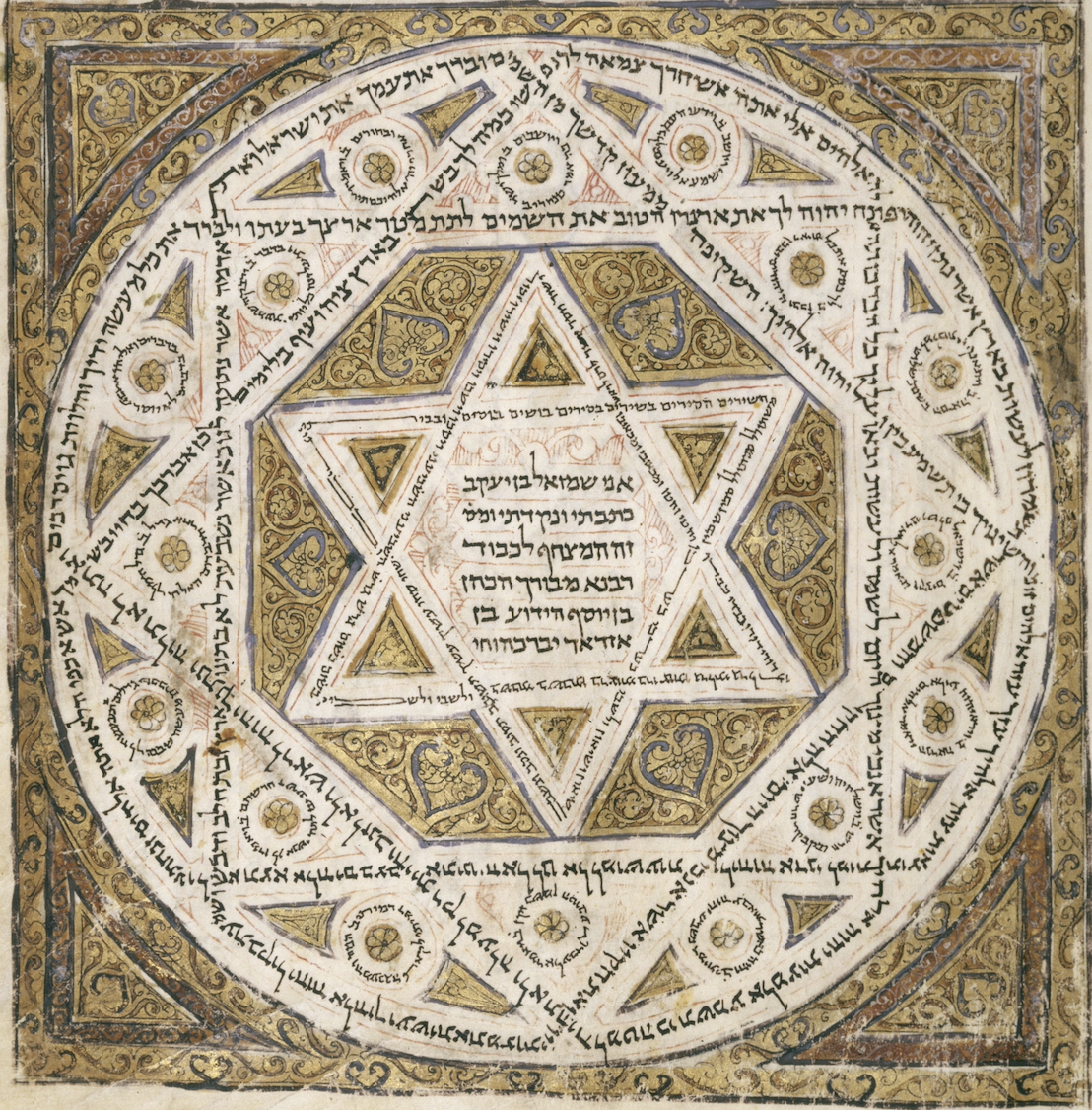
Early human language was sung rather than spoken. This is supported by anthropological and comparative linguistic evidence, where prosody, melody, and rhythm appear before fully abstract speech. The Masoretic cantillation system represents a late, prescriptive attempt to encode an earlier oral chanting tradition. It formalises pauses, accents, and intonation, but it is likely an imperfect externalisation of a much older vocal practice. The hypothesis explored here is that the Hebrew text of the Tanakh itself already contains sufficient internal structure to recover this vocal melody, independent of the Masoretic system. In other words, the language encodes its own chant.
I treated the Hebrew text as a purely symbolic system and attempted to recover vocal structure using only consonantal letters and lemma segmentation. No vowels, grammar, lexical meaning, or prosodic annotations were used. The method was based on spectral geometry. Each consonant was assigned coordinates in a low-dimensional metric space. In the simplest version, this space was one-dimensional, and, in the more powerful version, it was two-dimensional. These coordinates were not chosen arbitrarily, but optimised directly against an external structural signal. Each lemma was represented as the centroid of its consonant coordinates, effectively treating words as geometric aggregates rather than linguistic units. Adjacent lemmas formed a trajectory through this space, and the distance between consecutive centroids defined a transition magnitude. These magnitudes were interpreted as vocal movement over the text, analogous to melodic motion.
This produced a continuous geometric signal over the entire corpus, effectively a scalar or vector field indexed by the sequence of lemmas. No smoothing, windowing, or temporal modelling was applied; the signal emerged directly from the symbolic composition of the text. The signal was then compared against Masoretic cantillation marks, which encode syntactic and prosodic boundaries. These marks were treated purely as an external classification of boundaries into conjunctive and disjunctive types, without using their melodic values or traditional musical interpretations. The result was that large geometric transitions aligned with disjunctive Masoretic boundaries with very high accuracy. In the two-dimensional version, 93% of the strongest transitions in Genesis 1 coincided with true syntactic breaks, while baseline expectation was approximately 53%. Similar enrichment persisted across other books, despite differences in genre and style. This level of alignment cannot be attributed to chance or surface frequency effects. It indicates that the geometric structure being recovered reflects a real property of the language.
Crucially, no linguistic model was trained. There was no representation learning, no neural network, and no statistical fitting of meanings. The only operation performed was the optimisation of a small set of numerical coordinates for the twenty-two Hebrew consonants, using direct search methods to maximise the separation between geometric transition magnitudes at disjunctive versus conjunctive boundaries. The objective function was explicitly defined, and the parameter space consisted of a few dozen real-valued numbers. The entire system consists of explicit, inspectable Python code and simple arithmetic operations on symbol sequences. The result is therefore not a learned model in the usual sense, but a discovered coordinate system that makes latent structure in the text measurable.
The key point is that this coordinate system was derived without any knowledge of the Masoretic system, yet it was able to predict Masoretic emphasis. This suggests that the cantillation tradition did not impose melody onto an otherwise neutral text, but rather attempted to preserve a melodic structure that already existed in the internal organisation of the language. Because the Masoretic system was written down many centuries after the text itself, and after long periods of oral transmission, it is likely that some drift occurred in the vocal tradition. The spectral geometry appears to recover a cleaner and more internally consistent version of the melodic structure, derived directly from the symbolic composition of the text rather than from inherited performance practice.
When the learned geometry was rendered as sound, the resulting MIDI exhibited coherent melodic structure. Lemma centroids were mapped to pitch space, and geometric distances were translated into melodic intervals. No musical rules, scales, or harmonic constraints were imposed. Phrase boundaries aligned with syntactic boundaries, and the output was musically stable rather than random. The music was not composed or curated; it emerged directly from the geometric signal. This can be interpreted as a reconstruction of the vocal dynamics implied by the text itself, potentially closer to an earlier form of chant than what is preserved in later cantillation systems.
The overall implication is that the Tanakh encodes a latent melodic structure that can be recovered through spectral geometry. This structure predicts historical prosodic segmentation, generalises across books, and produces a coherent acoustic signal. The Masoretic tradition appears to be a partial and possibly drifted record of this structure, while the geometric method recovers it directly from the internal logic of the language.